continued from part 3!
On Tuesday our mission was to investigate the Used Bookstore neighborhood of Kanda/Jinboucho (or Jimboucho or Jimbocho, however you feel like spelling it, we saw all three)! We slept late again but were out of the hotel by noon. So, after consulting Tim's information we hopped onto the train and soon we were walking down Hakusan-Dori past bookstores and record stores and a coffee shop where we had a light lunch. Kanda Jinbo-cho is a university neighborhood and there are a lot of publishers there so it's just a real booky sort of place. The record stores have a lot of jazz LPs. And of course the streets were filled with political candidate sound trucks:
There is a tall thin building near the intersection of Yasukuni-Dori and Hakusan-Dori that is called the Kanda Kosho Center; it contains a record store, a shop filled with movie stills, posters, program books, and other paper ephemera, and a store called Nakano Shoten which was mind-blowingly awesome; walls decorated with original manga artwork, original manga pages for sale (including a Tezuka page), tons of old manga tankubons and weeklies dating back to the 1960s, anime magazines and books, anime cels, LPs and 45 singles, and more incredible stuff than I can describe.
At any rate we spent a lot of money in that shop, and then we wandered around the neighborhood and went to another of Tim's recommendations, a shop called "Book Dash" next to a crazy lookin' movie theater. Book Dash had a lot of 80s anime books and magazines and manga; their prices seemed to be a bit higher than elsewhere, but they did have neat stuff and it's worth a look if you're in the neighborhood.
Afterwards we went back down to the train station and got some lunch. I looked at the map and noticed that if we just walked up the Sotobori-dori next to the Kanda-gawa (river), we'd be in Akihabara again! The river is in a steep ravine and is lined with trees and the cicadas were ear-splitting on occasion, but it was a gorgeous walk. We went past a truck apparently owned by a Miyazaki fan:
There was only one shop I really wanted to hit again in Akihabara, a store called "Golden Age", but of course it was closed on Tuesdays. So we wandered around some more and watched the packs of foreign otaku tourists investigate the vending machines, and then we went back to the train station and back to Shinjuku. We had dinner in a little place near our hotel that was all pork dishes: we established early on that the wait staff did not speak English, but they had a menu with English and handy photos for us barbarians. Afterwards we wandered around Kabuki-cho and got a bit lost but found our hotel by approaching it from the other direction, which was kinda neat. Saw the first vending machine with beer. And that was Tuesday in Tokyo!
So on Wednesday we got up and over to the station and met Roy in front of that ubiquitous Studio ALTA sign. And it was off to Mitaka Station (named after the Maison Ikkoku character) to go to the Ghibli Museum! This mecca for anime nerds is of course on the must-see list for every stinking roundeye tourist and we're no exception. Fun fact: buy your Ghibli tickets way in advance. Don't just fly to Tokyo, take the train to Mitaka station, take the cat-bus to the Ghibli Museum, and expect to walk right in! Here's the bus, by the way.
They don't allow photos inside, and unlike the Schulz museum I actually obeyed their instructions. I was a GUEST in that country, soldier! So you don't get pictures of the amazingly gigantic zoetrope, the enormous soft cat bus that children can play in, the huge pile of every single drawing that went into making PONYO, the reproduced studio and office, or the iron staircases, little cubbyholes, and whimsical platforms to nowhere that give the building character. On the roof they do have a garden accessible by a spiral staircase, and this garden is guarded by...
AAAA! Giant Laputa robot!! It's a great reproduction, it's not just a solid cast but is metal fitted around parts, so when you thump it it feels just like a real robot. So if you make it to the Ghibli Museum don't forget to go to the roof. There's also a gift shop and a cafe, of course.
After the museum, we took a stroll through Inokashira Park (you used to be able to see Miyazaki jogging in this park on a regular basis!) and boy, the turtles are totally looking for handouts in this park.
It's a popular cherry-blossom viewing park in the springtime and it's right next to Kichijoji, where we wandered around the shopping arcade and got some lunch. We then went across the tracks...
...yes, the pedestrian crossings you've seen characters waiting around in every anime show ever, the ones you do not want to try and beat because those trains are FAST... to Shimokitazawa, "one of the trendiest and most looked-after area to live for young Tokyoites." This funky hipster neighborhood features trendy boutiques, coffee shops, and toy stores owned by guys who will follow you out the door giving you free Ultraman finger puppets. It's also home to a store called "Grown up Tabatha" which has a giant mural of the "Bewitched" character as an adult decorating its storefront and sells fashion and fashion accessories. We hit three toy stores and then had very good coffee in a wood-paneled coffee shop accented by the owner's collection of lanterns and dolls.
From there we got back on the train and went to Harajuku. Harajuku, of course, is the crazy young people fashion capital of Tokyo. It being a weekday there wasn't a lot of public exhibition going on, but the crowds were still overwhelming.
Yeah, that's just people, all the way down. Harajuku is home to extremely fashionable shops and high-end botiques of all kinds, as well as "Kiddyland", a multi-story toy wonderland for kids of all ages. We picked up some gifts and learned that Monchichis are back and this time they're dressed as your favorite cartoon characters!
Having dispensed with Harajuku, we got back on the train and went to Shibuya and wandered around gaping at the love hotels and the seedier side of the Japanese Economic Miracle, including this adult accessories shop whose warning sign was really amusing:
We hit Mandarake again and I found even more cool stuff that I'd missed the first time around, and then we got some dinner, and then we said "goodnight" to Roy and got back on the train and went back to Shinjuku and went to bed because we were beat! And that was the way it was Wednesday August 26 2009.
More to come in part 5!
Friday, July 15, 2016
Wednesday, July 13, 2016
Tokyo 2009 part 3
Continued from Part Two
After Sunday's long march, we were determined to take it a little easier on Monday. And we did. We slept late and took our sweet time getting out of the hotel and wandered through the neighborhood towards the train station, passing lots of closed up nightclubs. Including this one which apparently has a "Rose Of Versailles" theme:
We never did see this place during operating hours, so who knows what kind of establishment this is? Lesbian bar? Transvestite bar? Transvestite lesbian manga cafe? Fencing school? Historical manga re-enactment society headquarters? We shook our heads and moved on to Mr. Donut, who not only has a decent donut, but the coffee is also OK and unlike Tim Horton's, they will come by your table with refills.
From there, acting on travel advice given to us by darn near everybody but fleshed out into action-plans for us by the mighty Tim "The Hammer" Eldred, we hopped the train to Nakano Broadway, (warning, link has embedded music so turn your speakers down) a "Holy place for Otaku in Tokyo." For once the internet hype isn't lying. This building is filled with fairly normal business establishments on the ground floor but above is honecombed with shops selling toys, figures, manga, doujinshi of all stripes, video games, animation cels, records, DVDs; much like Akihabara but with less moe and more Showa. Oh you don't believe me. Well, look.
The first place we went into had a case full of Prince Planet memorabilia. That's right, the show I watched when I was 2 that began my obsession with bug-eyed Japaheeno cartoons, all rendered in plastic and screen-printed metal still life.
I am still deeply psychologically moved by my experiences at Nakano Broadway. We bought some cheap cels and old 45 singles and manga and spent most of the afternoon shopping, and then we went downstairs to the coffee shop and had some drinks, and then we went back upstairs and made sure we didn't miss anything. We then got back on the train and went back to Shinjuku and dropped our stuff off at the hotel and rested a bit, and then we went back out to Ikebukuro on the advice of Shain's research which had uncovered several manga/anime type shops in the area. Long ago a turtle came out of a lake carrying a bag on its back, and hence Ikebukuro ("pond bag") got its name. Today it's home to a giant Seibu department store, the Sunshine City entertainment complex, and a Wendy's.
We did not go in the Wendy's. I am still sore on them for their terribly misleading "boneless wings" advertising. At any rate, we wandered around looking for "Otome Road", didn't find it, found a four story manga/anime superstore (first floor, anime DVDs and doujinshi for ladies. Second floor toys and kits. Third floor doujinshi for men with lots of porn. Fourth floor - big warning signs informing us that beyond this point only those aged 18 and up will be admitted. BELIEVE THOSE SIGNS, people, because if you think it can't get any worse, IT DOES.), found another shop that was tucked away around a corner and was nothing but doujinshi for the ladies, and from there got directions to the Animate store, four floors of anime stuff including the customary floor jammed with deviant transgressive homemade comics about cartoon characters learning more about themselves. Also cool Ultraman merchandise and merchandise from darn near everything else.
We had dinner at the Denny's, where I found the Grand Slam and the Moons Over My Hammy to be completely nonexistent, though Shain did get the "American Club Sandwich", which contains that basic ingredient of Japanese cooking, an egg. Of course this invalidates it being a club sandwich, but whatever. And then we went back to the hotel for a good night's rest. Tomorrow: Jimbocho/Kanda! Oyasuminasai, inflatable Prince Planet!
More to come in Part Four
After Sunday's long march, we were determined to take it a little easier on Monday. And we did. We slept late and took our sweet time getting out of the hotel and wandered through the neighborhood towards the train station, passing lots of closed up nightclubs. Including this one which apparently has a "Rose Of Versailles" theme:
We never did see this place during operating hours, so who knows what kind of establishment this is? Lesbian bar? Transvestite bar? Transvestite lesbian manga cafe? Fencing school? Historical manga re-enactment society headquarters? We shook our heads and moved on to Mr. Donut, who not only has a decent donut, but the coffee is also OK and unlike Tim Horton's, they will come by your table with refills.
From there, acting on travel advice given to us by darn near everybody but fleshed out into action-plans for us by the mighty Tim "The Hammer" Eldred, we hopped the train to Nakano Broadway, (warning, link has embedded music so turn your speakers down) a "Holy place for Otaku in Tokyo." For once the internet hype isn't lying. This building is filled with fairly normal business establishments on the ground floor but above is honecombed with shops selling toys, figures, manga, doujinshi of all stripes, video games, animation cels, records, DVDs; much like Akihabara but with less moe and more Showa. Oh you don't believe me. Well, look.
The first place we went into had a case full of Prince Planet memorabilia. That's right, the show I watched when I was 2 that began my obsession with bug-eyed Japaheeno cartoons, all rendered in plastic and screen-printed metal still life.
I am still deeply psychologically moved by my experiences at Nakano Broadway. We bought some cheap cels and old 45 singles and manga and spent most of the afternoon shopping, and then we went downstairs to the coffee shop and had some drinks, and then we went back upstairs and made sure we didn't miss anything. We then got back on the train and went back to Shinjuku and dropped our stuff off at the hotel and rested a bit, and then we went back out to Ikebukuro on the advice of Shain's research which had uncovered several manga/anime type shops in the area. Long ago a turtle came out of a lake carrying a bag on its back, and hence Ikebukuro ("pond bag") got its name. Today it's home to a giant Seibu department store, the Sunshine City entertainment complex, and a Wendy's.
We did not go in the Wendy's. I am still sore on them for their terribly misleading "boneless wings" advertising. At any rate, we wandered around looking for "Otome Road", didn't find it, found a four story manga/anime superstore (first floor, anime DVDs and doujinshi for ladies. Second floor toys and kits. Third floor doujinshi for men with lots of porn. Fourth floor - big warning signs informing us that beyond this point only those aged 18 and up will be admitted. BELIEVE THOSE SIGNS, people, because if you think it can't get any worse, IT DOES.), found another shop that was tucked away around a corner and was nothing but doujinshi for the ladies, and from there got directions to the Animate store, four floors of anime stuff including the customary floor jammed with deviant transgressive homemade comics about cartoon characters learning more about themselves. Also cool Ultraman merchandise and merchandise from darn near everything else.
We had dinner at the Denny's, where I found the Grand Slam and the Moons Over My Hammy to be completely nonexistent, though Shain did get the "American Club Sandwich", which contains that basic ingredient of Japanese cooking, an egg. Of course this invalidates it being a club sandwich, but whatever. And then we went back to the hotel for a good night's rest. Tomorrow: Jimbocho/Kanda! Oyasuminasai, inflatable Prince Planet!
More to come in Part Four
Tokyo 2009 part 2
Continued from Part 1
Where was I? Oh yeah, 2009, Akihabara, Ultraman ginger ale, Mos Burger. We left Akiba and its giant poster of the prime minister proclaiming how much he loves Electric Town, and we went over to Asakusa. This ancient district is home to a gigantic temple, the oldest amusement park in Tokyo, lots of narrow winding little streets filled with shops and bars, slightly shopworn pachinko parlors and movie theaters, and most important, the local OTB where drunk oyaji can bet on the ponies and have important, only slightly slurred discussions.
This is so Japan it feels like a movie prop or something at Epcot. The shrine itself was being worked on so it was covered in scaffolding and canvas, hence no photos. There was a fountain for ritual washing of hands and a firepit burning incense, the smoke of which is supposed to purify your body. There were also kiosks set up whereby you could randomly choose a printed fortune out of a little box, and if you didn't like your fortune, just tie the slip of paper to the handy little rails provided, and it doesn't count! Leading up to the temple was a long street of vendors selling everything from prop samurai swords to festival masks to candy to dolls and everything in between.
Another Asakusa attraction is, or was, since it's no longer there, but there was a little shop devoted to nothing but Ge Ge Ge No Kitaro, the eponymous star of the Shigeru Mizuki manga. You can buy piggybanks of Kitaro's eyeball father, you can get a yellow and black striped vest of your very own, and you can even buy Kitaro toilet paper, which I actually did.
From Asakusa we walked over to the banks of the Sumida river and bought tickets for a cruise downstream to Tokyo Bay and Odaiba.
And we left the crowds ourselves and went back past the Statue Of Liberty into the giant mall complexes that share Odaiba. One mall contains Shueisha's JUMP SHOP, where you can buy all things Shonen Jump! No, I didn't check to see if they had jump ropes or jumper cables. Though I will bring it up at the next stockholder's meeting. One of the malls is called Decks Tokyo Beach and what makes it special is that one of the floors is a Showa-era museum of popular culture! Showa era means postwar, baby boom, Ultraman, manga, anime, robot, Tokyo Olympics 1964, Godzilla, Kamen Rider, you name it, all the things that made me a fan of Japanese cartoons. So it's like a place built completely out of dreams, literally my dreams.
Where was I? Oh yeah, 2009, Akihabara, Ultraman ginger ale, Mos Burger. We left Akiba and its giant poster of the prime minister proclaiming how much he loves Electric Town, and we went over to Asakusa. This ancient district is home to a gigantic temple, the oldest amusement park in Tokyo, lots of narrow winding little streets filled with shops and bars, slightly shopworn pachinko parlors and movie theaters, and most important, the local OTB where drunk oyaji can bet on the ponies and have important, only slightly slurred discussions.
This is so Japan it feels like a movie prop or something at Epcot. The shrine itself was being worked on so it was covered in scaffolding and canvas, hence no photos. There was a fountain for ritual washing of hands and a firepit burning incense, the smoke of which is supposed to purify your body. There were also kiosks set up whereby you could randomly choose a printed fortune out of a little box, and if you didn't like your fortune, just tie the slip of paper to the handy little rails provided, and it doesn't count! Leading up to the temple was a long street of vendors selling everything from prop samurai swords to festival masks to candy to dolls and everything in between.
![]() |
| the Kitaro store |
From Asakusa we walked over to the banks of the Sumida river and bought tickets for a cruise downstream to Tokyo Bay and Odaiba.
We had to change boats to get to Odaiba and while changing we noticed something in the dock next to us- It's the Tokyo Bay ferryboat designed by none other than Leiji Matsumoto, famed creator of Captain Harlock, Space Battleship Yamato, Galaxy Express, Sexaroid, and Danguard Ace!
Unfortunately this was not the boat we'd be riding. And there were guys standing around it preventing me from sneaking on board to take pix. And our boat was leaving in a minute anyway. Still, it's kinda awesome.
![]() |
| the Matsumoto-designed ferry we didn't ride |
So, we got on the other boat and set out across the bay to Odaiba, an artificial island built to defend Tokyo against Commodore Matthew Perry's black ships, but now welcoming tourists and visitors from around the world! This is where Tokyo Big Sight is and where Fuji TV has its headquarters and there's a replica of the Statue Of Liberty, for some reason. Anyway, the whole reason we and millions of other tourists are going to Odaiba is the 1:1 scale Mobile Suit Gundam that was built by the Green Tokyo Gundam Project in an attempt to create the most-photographed object ever built.
You'd think that nearing the end of its display dates, the public interest in the Gundam would have diminished a bit - the thing had been up for months at this point. Would there be enormous standing room only swarms of people crowding around as close as possible to the Gundam, even minutes before the park closed for the night? Yes there would.
![]() |
| yes, there were cosplayers in the crowd |
And we left the crowds ourselves and went back past the Statue Of Liberty into the giant mall complexes that share Odaiba. One mall contains Shueisha's JUMP SHOP, where you can buy all things Shonen Jump! No, I didn't check to see if they had jump ropes or jumper cables. Though I will bring it up at the next stockholder's meeting. One of the malls is called Decks Tokyo Beach and what makes it special is that one of the floors is a Showa-era museum of popular culture! Showa era means postwar, baby boom, Ultraman, manga, anime, robot, Tokyo Olympics 1964, Godzilla, Kamen Rider, you name it, all the things that made me a fan of Japanese cartoons. So it's like a place built completely out of dreams, literally my dreams.
Yeah, that's an arcade full of vintage pachinko machines and 60s and 70s coin-op games, surrounded by anime posters of anime features from the 1960s and toys from everything from Olympic Sam to Kinikuman to Kikaider to Kenshiro. Watching over all this is a giant 2:1 Astro Boy.
The rest of the floor is candy shops, a store where you can buy LIVE giant horned fighting beetles, a deliberately cheesy haunted house, and little dioramas of everyday Tokyo life circa 1964 and 1978. I say "1978" because of this display:
The famous Yamato Bike!! It actually exists. And after a stroll through the mall and some rehydration via vending machine drinks, we made our way back to the train and back to Shinjuku station and from there Shain and I sort of wandered aimlessly for a while until we found a KFC and got our bearings, and our dinner, and then it was back to Hotel Tateshima for a well deserved rest, because that was kind of a long day.
Tokyo 2009 part 1
Back in the summer of 2009 we visited Tokyo for the first time! Here's our story.

It was always daylight during the flight. This meant we could look forty or fifty thousand feet down and clearly see chunks of unidentifiable somethings floating in the large bodies of water that make up Canada's extreme North. Logs? Ice? Floating eddies of windswept plastic garbage? Who knows. All I know is that I'd rather be having lunch above them than among them.
Our friend Roy met us at Narita after Customs (which didn't take long at all) and was immediately of vital assistance, namely because we didn't have the faintest idea of where we were going or what we were doing. He got us tickets on a slick JR train that whisked us through the lush, rolling countryside past fields and farms, through Chiba and right to Shinjuku Station. Even if you think you don't know Shinjuku, you actually do, because that's where that great big Studio ALTA video screen building is -that same Studio ALTA that was in the background of all your favorite anime hits of the 1980s, if your favorite anime hit was "Megazone 23". We took a cab from the station to the hotel, even though it isn't that far, really, but we had luggage. You know we've just arrived because we're trying to close the cab door by ourselves. Silly tourists, in Japan, cab door closes for you!
At any rate, we got to the hotel and checked in and the first thing we did was to turn on the TV, and the first thing on that Japanese hotel room TV was a rerun of Mach Go Go Go, or Speed Racer to us, which was very apt, as it's cartoons like Speed Racer that got us interested in Japan in the first place.
And we soon were back out onto the street, back to Shinjuku station, to try out our Suica cards and go to Shibuya! Shibuya, the heartbeat of young, wild-haired, shopping crazy, love-hotel addled Tokyo, is home to the famous Hachiko statue of the faithful dog, but it's also home to a Mandarake store which is where we was goin'. Mandarake is a chain of Japanese stores that exist to torture me and my bank account, being full of vintage robots, anime books, Roman Albums, manga old and new, doujinshi, DVDs, toys, model kits, advertising memorabilia featuring the little girl in my LJ icon, posters, if it's a crazy anime/manga thing and they can slap a price tag on it they will sell it and the prices aren't bad either. Immediately I found stuff I've been looking for for years. Had a great dinner in a traditional shoes-off place on the 8th floor of a shopping center, wandered around Shibuya for a while, took the train back to Shinjuku and Roy squired us around Kabuki-cho to scope out the tiny narrow streets full of tiny narrow bars that virtually cry out for you to belly up and down a shot in each. How could you not get sloppy weepy drunk in a bar decorated with famed prizefighter, the doomed Joe Yabuki?
Sunday morning we met Roy and went over to the Tokyo Metropolitan Government buildings, seen being destroyed by Godzilla and/or Mecha-Ghidorah in the fine cinematic gem "Godzilla Versus Mecha Ghidorah". This has observation decks on both towers that, on a clear day, allow views as far as Mt. Fuji. Sunday was not one of those days. Afterwards we had a Western-style breakfast at a place that (a) has little egg-shaped things on the table that when picked up, alert the wait staff that you need more coffee, and (b) have a children's meal featuring the Benesse corporation's little toddler tiger mascot who is best known in the West for being taught how to use the toilet in an amusing short animated film.
From there we went to Akihabara, the famed "electric town" nerd magnet moe capital of Japan and therefore the world. If you are looking for sexy body pillows featuring doe-eyed girls in underwear, or little plastic figures of doe-eyed girls in underwear, or dating simulation video games starring doe-eyed girls in underwear, or generally any sort of merchandise that can be made starring doe-eyed girls in underwear, Akihabara is the place for you. Judging from the girls in maid outfits standing on street corners in Akihabara, there must not be an unmaid bed or a dirty bathtub within fifty miles!
Seriously though, what they're doing is handing out flyers advertising maid cafes where girls in maid outfits will serve you two-thousand yen cups of coffee. This is appealing, apparently. We went into a bunch of stores, most of which were very excited about the new season of Haruhi Sazumiya and K-On! and whichever version of Evangelion is currently being sold to people who already have other version of Evangelion. However, there are a few places that cater to the Showa-era nerds such as myself, with display cases full of vintage Spectreman toys and X-Bomber robots in four different sizes and Jumbo Machinder super robots of all shapes and sizes and prices far beyond what I'm willing to shell out.

Narita Airport is about forty miles from Tokyo. When our flight arrived, full of punchy international travelers dazed from 12 hours of "Mad Men" reruns and the abandoned-two-thirds-of-the-way-in film "Adventureland", we still had that forty mile march between us and our final destination, "Demon City" Shinjuku.
It was always daylight during the flight. This meant we could look forty or fifty thousand feet down and clearly see chunks of unidentifiable somethings floating in the large bodies of water that make up Canada's extreme North. Logs? Ice? Floating eddies of windswept plastic garbage? Who knows. All I know is that I'd rather be having lunch above them than among them.
Our friend Roy met us at Narita after Customs (which didn't take long at all) and was immediately of vital assistance, namely because we didn't have the faintest idea of where we were going or what we were doing. He got us tickets on a slick JR train that whisked us through the lush, rolling countryside past fields and farms, through Chiba and right to Shinjuku Station. Even if you think you don't know Shinjuku, you actually do, because that's where that great big Studio ALTA video screen building is -that same Studio ALTA that was in the background of all your favorite anime hits of the 1980s, if your favorite anime hit was "Megazone 23". We took a cab from the station to the hotel, even though it isn't that far, really, but we had luggage. You know we've just arrived because we're trying to close the cab door by ourselves. Silly tourists, in Japan, cab door closes for you!
At any rate, we got to the hotel and checked in and the first thing we did was to turn on the TV, and the first thing on that Japanese hotel room TV was a rerun of Mach Go Go Go, or Speed Racer to us, which was very apt, as it's cartoons like Speed Racer that got us interested in Japan in the first place.
And we soon were back out onto the street, back to Shinjuku station, to try out our Suica cards and go to Shibuya! Shibuya, the heartbeat of young, wild-haired, shopping crazy, love-hotel addled Tokyo, is home to the famous Hachiko statue of the faithful dog, but it's also home to a Mandarake store which is where we was goin'. Mandarake is a chain of Japanese stores that exist to torture me and my bank account, being full of vintage robots, anime books, Roman Albums, manga old and new, doujinshi, DVDs, toys, model kits, advertising memorabilia featuring the little girl in my LJ icon, posters, if it's a crazy anime/manga thing and they can slap a price tag on it they will sell it and the prices aren't bad either. Immediately I found stuff I've been looking for for years. Had a great dinner in a traditional shoes-off place on the 8th floor of a shopping center, wandered around Shibuya for a while, took the train back to Shinjuku and Roy squired us around Kabuki-cho to scope out the tiny narrow streets full of tiny narrow bars that virtually cry out for you to belly up and down a shot in each. How could you not get sloppy weepy drunk in a bar decorated with famed prizefighter, the doomed Joe Yabuki?
![]() |
| Ashita No Joe themed bar in Kabuki-cho |
From there we went to Akihabara, the famed "electric town" nerd magnet moe capital of Japan and therefore the world. If you are looking for sexy body pillows featuring doe-eyed girls in underwear, or little plastic figures of doe-eyed girls in underwear, or dating simulation video games starring doe-eyed girls in underwear, or generally any sort of merchandise that can be made starring doe-eyed girls in underwear, Akihabara is the place for you. Judging from the girls in maid outfits standing on street corners in Akihabara, there must not be an unmaid bed or a dirty bathtub within fifty miles!
Seriously though, what they're doing is handing out flyers advertising maid cafes where girls in maid outfits will serve you two-thousand yen cups of coffee. This is appealing, apparently. We went into a bunch of stores, most of which were very excited about the new season of Haruhi Sazumiya and K-On! and whichever version of Evangelion is currently being sold to people who already have other version of Evangelion. However, there are a few places that cater to the Showa-era nerds such as myself, with display cases full of vintage Spectreman toys and X-Bomber robots in four different sizes and Jumbo Machinder super robots of all shapes and sizes and prices far beyond what I'm willing to shell out.
There is a Mandarake in Akihabara, though, and the bottom floor is full of guys who are choking back bitter tears as they sell their prized toys to the soulless, unfeeling claws of Mandarake. The upper floors are full of really awesome stuff, display cases of early pay-library Tezuka manga, used DVDs and Famicom games at reasonable prices, and doujinshi starring doe-eyed anime girls so unbelievably grotesque you'll want to claw your own eyes out. I had some Ultraman ginger ale from a vending machine, we witnessed hundreds of people playing the new Dragonquest on their Nintendo DSes on free wi-fi in front of a giant electronics store, and we met my old pal Jim at Mos Burger for a Mos Burgery lunch where we had burgers and Licca-chan shakes.
Wednesday, October 7, 2015
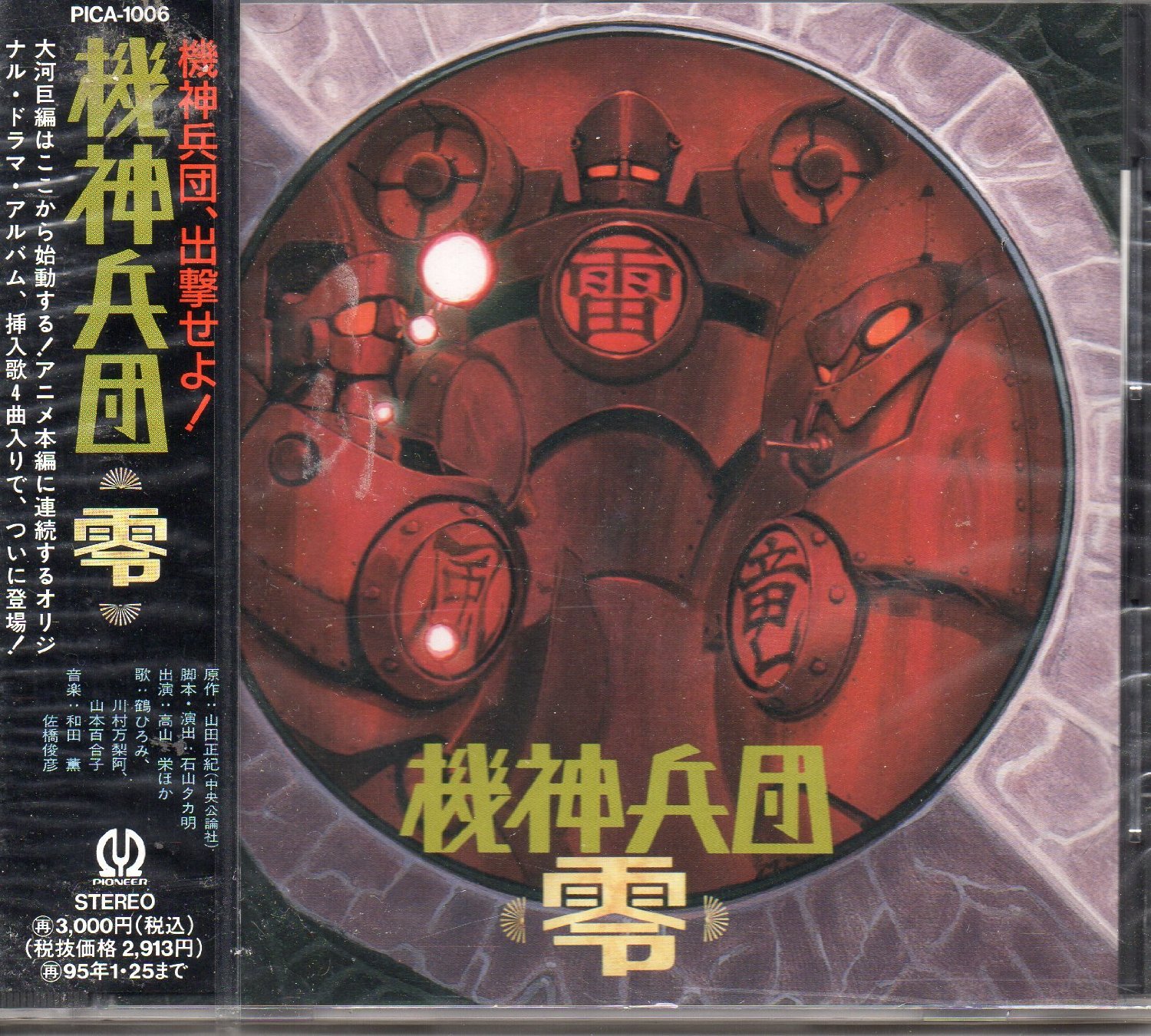
Alien Defender Geo Armor Kishin Corps review
This review originally appeared on Anime Jump in 2003.
Let's clarify a few things. The original Japanese title of this OVA series is Kishin Heidan, which roughly translates to Armored God Corps. It's based on a series of early 1990s light novels by Masaki Yamada. The Geneon-produced anime was first released in Japan in 1993, and was released in North America on VHS as Kishin Corps in 1995. To further confuse the consumer, the 2001 DVD release is titled Alien Defender Geo Armor Kishin Corps, and when the title of each episode is shown, it has the kanji for Kishin Corps, and beneath that, in English, "Kishin Corps - Active Defense Force". Confused? So am I.
Kishin Corps is an alternate-history World War Two story of Nazi Germany's pact with evil alien invaders, the secret army raised by Japan, Russia, the US, and Britain to defeat them, and how your requisite stalwart young Japanese boy is caught in the middle. Once again Japan's semiautonomous Kwantung Army is trotted out as power-mad imperialists (okay, but only because it's true); Geo Armor Kishin Corps labels them the Kanto Army, and as our story opens they're after a powerful secret module. Our hero Taishi is on board a Manchurian train with his mom and his pop, who is, as you have already guessed, a top scientist. The train is halted by Col. Shinkai and his Kanto Army, but their hijacking is interrupted by the arrival of space aliens, goopy amorphous humanoids who have mastered laser beams and space travel but prefer to use Russian PpSh submachine guns. This three-sided struggle is again interrupted by a mysterious giant robot from the Kishin Corps because this is, after all, their video.
Two months later Taishi, still holding onto the secret Macguffin Module, is leading a gang of orphans in Shanghai, staying one step ahead of the authorities and the Kanto Army. He helps a mysterious lady escape from Shinkai. This mysterious lady has a twin sister who is working with the Kanto Army to develop their own giant robots. Mysterious Twin swipes the Module from the kid gang, Taishi pursues, and again is saved by the intervention of the Kishin Corps. Taishi gets inducted into the Alien Defender Whatever Kishin Corps and gets to help out as their three giant robots - one land, one sea, one air - battle both the Kanto Army and our alien pals.
You see, a few years back, mysterious modules fell to Earth. These modules enabled whichever nation that found them to build giant fighting robots. Coincidentally these were distributed amongst the Major Powers of the prewar Earth, which was lucky for us since we had a world war brewing. It would have been interesting to see what kind of giant robot France or Brazil would have come up with, but we'd have to wait for G Gundam to see THAT.
The Japanese version of Kishin Corps made the rounds of fansubs and fanclubs for a few years before its legit release. To be honest, I wasn't too impressed with it at the time; mostly because Part One is weighed down with a lot of exposition and infested with charming kids and their charming kid-gang antics. Once Taishi gets hooked up with the Kishin Crew and is blasting aliens, things pick up considerably. The best part of Geo Armor Kishin Active Defense Whatever Corps is the detail given to the titular robots: these are gigantic, heavy, riveted-steel behemoths. They have spark plugs and fan belts and vacuum tubes and hydraulics and all that stuff that your car has under the hood, and they all move with a ponderous weight that the animators do a terrific job portraying. In fact, there may be a little too much attention to detail. Kishin Thunder has to be transported to the battle via train: luckily, the bad guys have cooperated by locating their evil deeds or evil bases on train tracks. It's enough to make one think of Homer Simpson's favorite show "Nightboat", where there's always a river, or a canal, or a fjord.
Kishin Corps' main ingredient is characters rushing from one place to another: our heroes jump from moving cars to giant blimps to airplanes to trains and back again, always chug-chug-chugging towards another battle with the foe, rattling off great gobs of exposition every chance they get. And yet, with all this "action", nothing much happens. This is a 7-part OAV that easily could have been a 4-parter, or even a 3-parter without too much trouble. Even the fight scenes are padded like a junior high school girl's bra; while the explosions and gunfire conveniently halt, characters will stare at each other, stare at their opponents, stare at the new arrival zooming in from a few miles out. In a film with a stronger visual sense and a knowledge of how to use the quiet moments for effect - think Oshii's Patlabor - these time-outs heighten the sense of drama and contrast the action. Unfortunately Geo Armor Alien Kishin Defender Corps isn't one of those films.
Not much attention is given to making this period drama look like a period drama. There's an attempt to make the Nazis into bishonen-style prettyboys with long hair and dreamy eyes; the Kanto Army's leader Shinkai looks like a pumped-up Count Dracula, and there are enough giant, pointed shoulder pads to make Joan Crawford run for cover. The good guys are all pretty standard anime-character good guys, with the big hair and pointy chins and giant ears. These are, hands down, the largest ears for standard characters seen in anime since Tobidase! Batsuchiri. All told, Geo Kishin Armor Corps sports a really jarring look for a period anime, and one that begs the question, if you're not going to be obsessive about period detail, why do a period anime in the first place?Characters all have standard issue anime-character crazy multicolored hair, defying gravity as if they were ignorant of the Hair Treatment Technology that was widely used in those turbulent times. If these characters happen to be dressed in period costume, it's because fashions haven't changed that much - and some characters aren't anywhere near the 40s, unless the Miami Vice look began in 1943.
The dubbing is well-acted, but clumsily written. There are plenty of awkward pauses and sentences that sort of make sense. Here's my tip; if the anime involves Japanese military, go with the subtitles. The DVD extras are: mechanical designs and character designs. There's a point-by-point explanation of the various systems of the various robots, which is where I learned that Kishin Dragon's Anchor Guns are powered by "gunpowder force". There is also a hilarious live-action segment, a round-table discussion starring non-acting gaijin playing high-level Nazis discussing the aliens, the modules, and the Kishin Corps in bad German. Available on the original video release, it's now professionally subtitled for everybody to enjoy. It is an interesting clamshell two-DVD set; instead of the standard black plastic Pioneer has given Geo Armor Kishin Corps a nifty copper-colored case that really stands out.
To be sure, there's some entertainment in Kishin Corps. The battle scenes are entertaining, if overused, and the concept of Japan at war with its own imperialist faction makes for a nice what-if. But the WWII setting is woefully underused and the aliens remain unexplained creatures from the planet Plot Device, while the character designs seem to be lifted wholesale from a completely different show. Plus, there are lots of annoying children. In short, Geo Armor Kishin Corps has some interesting parts, but they don't add up to an interesting whole.
-Dave Merrill
Tuesday, June 30, 2015
advice to the young fan event
Recently, a first-time convention organizer asked me for advice. I wound up writing more than I originally intended, and it seems as if this sort of thing might help others in the same position, so I figured I'd generalize it a little and throw it out in public for the benefit of anyone interested. Here goes!
I helped start an anime convention (AWA) in Atlanta in 1995, before Japanese cartoons were really any sort of pop culture thing, and it's still going, so I guess we did something right. I also helped organize a UFO/conspiracy culture/hacker show in 1991-1992 that kind of fizzled out, so I have a little experience in what NOT to do, as well. I now live in Toronto, and in both cities I've staffed fan conventions and seen shows rise and fall for various reasons.
You want to start with a small, manageable show. When I say "manageable" I mean a show you can manage physically, in that you can personally make sure all the advertising is distributed, all the guests show up, all the events happen on time, the dealers have what they need, the attendees get their badges, and registration gets their money. I also mean a show you can manage financially, in that you can pay for it without a second mortgage or having to hope an extra 500 people show up on Sunday.
When we started AWA, we budgeted assuming we'd get 200 people. We figured there were 200 people in the fandom community of our city that could be counted on to show up to just about any fan convention. We spent as little money as possible on our first year. Our program books were black and white copies assembled by hand fanzine-style, and our guests were industry folks, comic artists we knew, and local fans, all whom would show up without asking for speaking fees. We booked a very cheap facility and only booked the exhibit space we needed and we didn't have T-shirts or a con suite or any of the catering events that hotels love to throw at conventions. When the convention started on Friday afternoon, before the first walk-in bought the first walk-in badge, we'd already paid for the entire show via advance registration and vendor table fees.
It's vital to honestly estimate how many people will come to your show. You can base this on how well other first year shows do in your market, and other metrics like population, other fan events in the area, nearby colleges, etc. You'll want to lowball that estimate and spend money based on your lowest figure. It's much better to have booked a slightly too-small function space and be crowded and busy; the event seems more fun, more exciting, and it makes your show look attractive and successful, instead of a few fans wandering around inside a cavernous, empty convention center that got booked because the organizers fooled themselves.
Everything is negotiable; hotel rates, convention center rates, guest speaking fees, everything. Hotels will give you better rates on meeting space if you can promise (and sell!) a certain number of room nights. Convention centers aren't as flexible and will generally cost more. Convention centers may require you to engage further contractors to handle table setup, AV equipment, etc. Get quotes and do research while working out your costs.
I should mention the ridiculous turnover rate in the hospitality industry. It's nuts. People cycle through hotel positions with astounding rapidity. Speaking to the same person more than twice in a row is rare. If you do establish a good relationship with somebody at a convention center or hotel, hang onto it.
And of course get everything in writing. Make sure you have a printed copy of the contract in hand from the very beginning of setup to the very end of take-down, and that includes maps and diagrams of how every room is to be set up, table and chair layouts, power drops, everything. Count on it - there WILL be problems with the facility where everybody isn't on the same page, and having that page in your hand is a tremendous asset.
Plenty of people - potential guests, vendors, fan groups, local celebrities, you name it - will approach your show with what they think are great ideas for events or appearances. Generally they will want you to do most of the actual work while they reap the benefits, so be wary. Filling panel slots with fan-run events is a great way to round out your schedule and involve the community; just make sure to be very clear on what your organization is providing and what they will need to provide themselves. Most conventions have some sort of panel event form that panelists submit, and this is a great idea to keep everyone on the same page.
Again, you'll have countless people coming up to you with great ideas that you should implement. Well, "you" are busy with other things. Keep focused on YOUR goals. There's always next year for these people and their extraneous events. Of course sometimes these volunteers wind up producing terrific events and becoming valuable members of your team. Gambles sometimes pay off. Have a back-up plan for when they don't.
Like the saying goes - never buy what you can rent, never rent what you can borrow, never borrow what you can steal. You don't need a state of the art HD surround sound video room, you don't need to buy 10 TVs and 30 video game systems, you don't need to cater meals for 300 people all weekend long (these are all things people will ask you to do for them. "No" works great as an alternative). If you buy AV equipment, consoles, speakers, or anything else, guess what? They're yours now, and they have to be somewhere the 51 other weekends a year you aren't running a convention. Unless you own a warehouse, that costs $$$. There are many fine event equipment rental outfits in every large city - some of them probably provide services to your favorite conventions. Do your research.
In my opinion, one of the most successful shows I've seen is TCAF in Toronto; it's a free-to-the-public event held over 2 days in the main branch of the library downtown. TCAF works with the city and receives support from the library and other municipal organizations. The vendors and exhibitors are curated heavily and they do a ton of business, and the general public can wander through and enjoy themselves without having to stand in line for badges. Not every city can handle a TCAF but their model is worth emulating, I think. If you can work with the city and put together a package that appeals to the community at large, that's a win for everybody. Don't be afraid to think outside the box and move beyond the typical comic-con cliche.
What about guests? Here's the big secret about guests: they don't really matter that much. Sure, they look great on your advertising, but with few exceptions that's their only benefit to you. It's a great deal for THEM - they get a free airline trip, a hotel room and meals, events where they can pretend to be big stars, and a table they can sell autographs and merchandise from. For you, it might be nothing but headaches and babysitting. You need to do strict cost-benefit analysis on every single one of your guests and be blunt about how much they're going to cost you and how much your show will benefit from their appearance. Do you want to shell out travel and lodging for a guest whose big Q&A panel only attracts flies? Certainly, there are guests who are worth the time and money, and part of running a convention is knowing who those people are and how much trouble they're going to be to get. Pay attention when visiting other conventions and see who clicks with the crowd and who doesn't. If you honestly have no idea of how big a draw a particular guest is going to be, perhaps running a fan convention isn't for you.
The truth is, fans will attend a fun event no matter who the guests are. You aren't selling a guest or a book or a physical object, you're selling an intangible - an experience, the experience of shopping in a dealer's room, of seeing people in costumes, of participating in discussions with fellow fans about favorite movies or TV shows or comics, of playing games with friends and strangers. Guests are only a small part of that package.
What about competition? In terms of another organizer putting on a show in your territory, your best response is to make YOUR show the BEST show you can possibly make it. Let the other guy go his own way. If you must mention other shows, make every public statement polite and professional. If you're going to promote your convention at his event, then be friendly and polite and smile and wish him all the best, and in return, make sure his experience at your show is a positive one. Maybe you can turn a potential competitor into an ally. Fan conventions need each other for networking and advertising, for staff, for vendors; conventions don't exist in a vacuum.
Let's face it; running a convention is a pain in the ass. Your phone rings all the time with idiots asking stupid questions, every teeny tiny detail will need your attention, every decision you make will be second-guessed and debated by pedantic fanboys and fangirls and fanwomen and fanmen, and if you happen to make any money at all out of the convention, it will need to be plowed right back into next year's show. The week leading up to the show you'll be a nervous wreck, when the actual show happens you'll be in a state of low-grade, out-of-body-experience panic, and when it's over you'll be totally destroyed, and then the grind starts all over again. If your competition wants to take that on himself, then he's welcome to it. It's a big world and there is room for conventions all over the calendar and all over the map and you can't waste any time worrying about anybody else's convention, you have your own thing to worry about.
So, to sum up:
1. start small and manageable
2. work with the city & community
3. don't be afraid to say no
4. get it in writing
5. cost-benefit analysis on everything
6. worry about your own show, not anybody else's
7. good luck.
-Dave Merrill
Friday, June 19, 2015
Element Of Surprise comics Kickstarter
PRESS RELEASE
“The Element of Surprise” Webcomic Launches Kickstarter Campaign
Toronto artist Shain Minuk, co creator of the comics and pop culture website Mister Kitty and Friends (http://misterkitty.org/), has launched the website’s first Kickstarter campaign this week with the target of funding a deluxe, 268 page collection of her webcomic, The Element of Surprise. Described by the comic’s creator as “similar to Starsky and Hutch, only a little less gay”, The Element of Surprise details the relationship between two men, Mark and Ben, in a nameless but crime-ridden city somewhere in America’s “rust belt”.
The Kickstarter campaign, located here, has a variety of rewards for pledges that range from $1 to $200. Readers of the webcomic, which updates weekly at http://www.misterkitty.org/ comics/element/elementintro. html , have been hoping for a print version for quite some time, and Mister Kitty and Friends have finally responded.
With the help of crowd funding by Kickstarter, Minuk intends to publish the first two story arcs of The Element of Surprise, while a third arc is currently running in weekly updates on the Mister Kitty website. The collected volume of the webcomic will detail the two men in the early stages of their relationship, struggling with their own internal conflicts while facing up against corrupt politicians and various violent miscreants, in a story providing plenty of action and romance.
The Element of Surprise Kickstarter campaign is on until July 17th 2015.
Subscribe to:
Posts (Atom)