Showing posts with label anime. Show all posts

Saturday, January 5, 2019

Anime Hell Presents: The 60s Show

Join ANIME EXPERT Dave Merrill for an evening of 1960s Japanese animation madness as we take a time tunnel trip back to the decade that put anime on the map as a force of international pop culture. TV cartoons, short films, commercials, trailers, and more will be impressed onto your eyeballs at the speed of light! We're showing an episode of Speed Racer, an episode of Prince Planet, and the film "Flying Phantom Ship", all dubbed or subtitled in English for your listening pleasure. See you on January 26! 

https://www.facebook.com/events/224447995111778/


Friday, September 2, 2016

Anime Hell 2016 for AWA!

My freeform clip show Anime Hell returns for its 19th iteration at Anime Weekend Atlanta, which is a fact that fills me with both pride and horror. As does much of what I'll be showing this year!


If you miss it you'd better be dead or in jail! And if you're in jail, break out!

Wednesday, October 7, 2015

Alien Defender Geo Armor Kishin Corps review

This review originally appeared on Anime Jump in 2003.

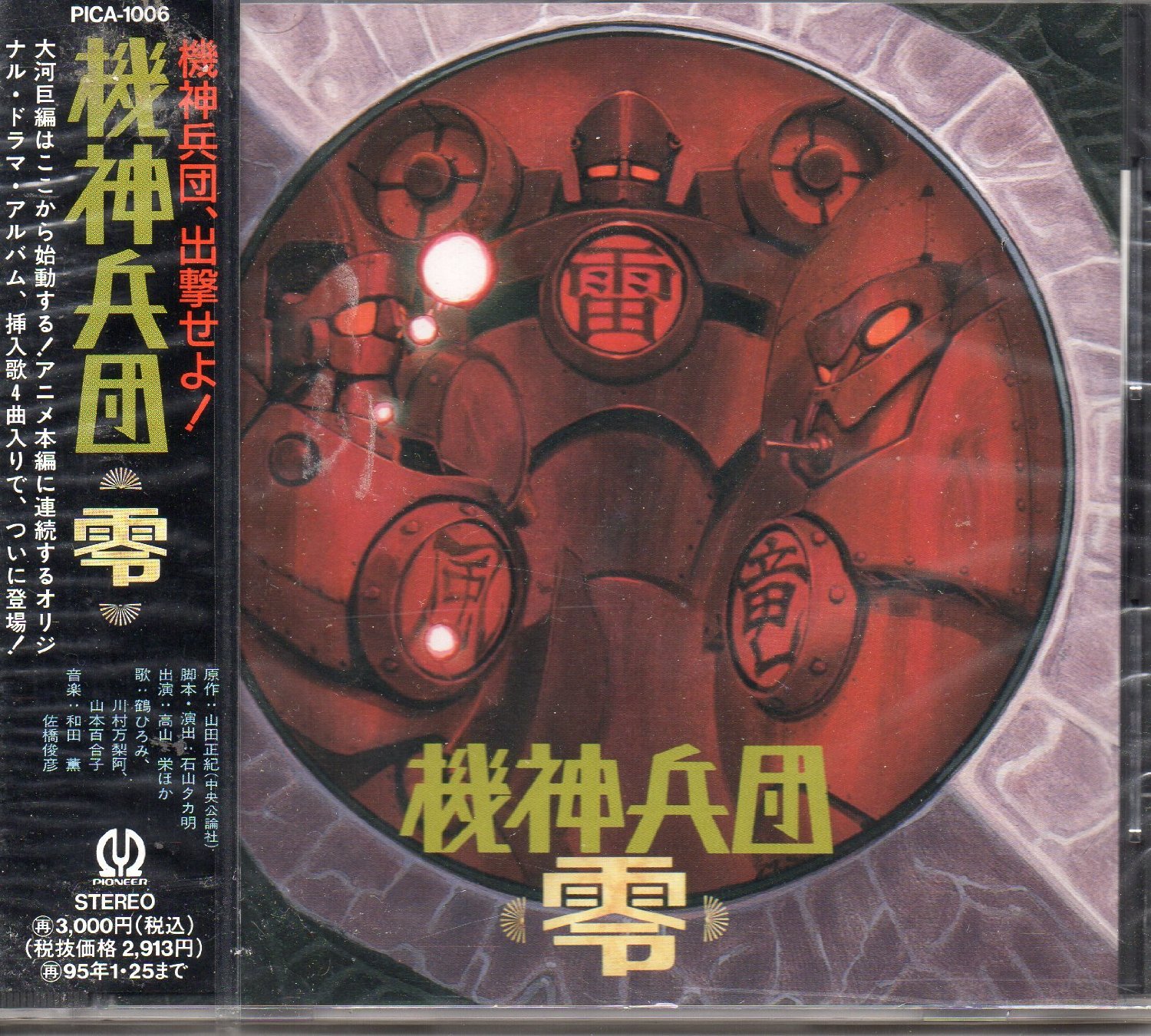
Let's clarify a few things. The original Japanese title of this OVA series is Kishin Heidan, which roughly translates to Armored God Corps. It's based on a series of early 1990s light novels by Masaki Yamada. The Geneon-produced anime was first released in Japan in 1993, and was released in North America on VHS as Kishin Corps in 1995. To further confuse the consumer, the 2001 DVD release is titled Alien Defender Geo Armor Kishin Corps, and when the title of each episode is shown, it has the kanji for Kishin Corps, and beneath that, in English, "Kishin Corps - Active Defense Force". Confused? So am I.

Kishin Corps is an alternate-history World War Two story of Nazi Germany's pact with evil alien invaders, the secret army raised by Japan, Russia, the US, and Britain to defeat them, and how your requisite stalwart young Japanese boy is caught in the middle. Once again Japan's semiautonomous Kwantung Army is trotted out as power-mad imperialists (okay, but only because it's true); Geo Armor Kishin Corps labels them the Kanto Army, and as our story opens they're after a powerful secret module. Our hero Taishi is on board a Manchurian train with his mom and his pop, who is, as you have already guessed, a top scientist. The train is halted by Col. Shinkai and his Kanto Army, but their hijacking is interrupted by the arrival of space aliens, goopy amorphous humanoids who have mastered laser beams and space travel but prefer to use Russian PpSh submachine guns. This three-sided struggle is again interrupted by a mysterious giant robot from the Kishin Corps because this is, after all, their video.

 Two months later Taishi, still holding onto the secret Macguffin Module, is leading a gang of orphans in Shanghai, staying one step ahead of the authorities and the Kanto Army. He helps a mysterious lady escape from Shinkai. This mysterious lady has a twin sister who is working with the Kanto Army to develop their own giant robots. Mysterious Twin swipes the Module from the kid gang, Taishi pursues, and again is saved by the intervention of the Kishin Corps. Taishi gets inducted into the Alien Defender Whatever Kishin Corps and gets to help out as their three giant robots - one land, one sea, one air - battle both the Kanto Army and our alien pals.

 You see, a few years back, mysterious modules fell to Earth. These modules enabled whichever nation that found them to build giant fighting robots. Coincidentally these were distributed amongst the Major Powers of the prewar Earth, which was lucky for us since we had a world war brewing. It would have been interesting to see what kind of giant robot France or Brazil would have come up with, but we'd have to wait for G Gundam to see THAT.

The Japanese version of Kishin Corps made the rounds of fansubs and fanclubs for a few years before its legit release. To be honest, I wasn't too impressed with it at the time; mostly because Part One is weighed down with a lot of exposition and infested with charming kids and their charming kid-gang antics. Once Taishi gets hooked up with the Kishin Crew and is blasting aliens, things pick up considerably. The best part of Geo Armor Kishin Active Defense Whatever Corps is the detail given to the titular robots: these are gigantic, heavy, riveted-steel behemoths. They have spark plugs and fan belts and vacuum tubes and hydraulics and all that stuff that your car has under the hood, and they all move with a ponderous weight that the animators do a terrific job portraying. In fact, there may be a little too much attention to detail. Kishin Thunder has to be transported to the battle via train: luckily, the bad guys have cooperated by locating their evil deeds or evil bases on train tracks. It's enough to make one think of Homer Simpson's favorite show "Nightboat", where there's always a river, or a canal, or a fjord.

Kishin Corps' main ingredient is characters rushing from one place to another: our heroes jump from moving cars to giant blimps to airplanes to trains and back again, always chug-chug-chugging towards another battle with the foe, rattling off great gobs of exposition every chance they get. And yet, with all this "action", nothing much happens. This is a 7-part OAV that easily could have been a 4-parter, or even a 3-parter without too much trouble. Even the fight scenes are padded like a junior high school girl's bra; while the explosions and gunfire conveniently halt, characters will stare at each other, stare at their opponents, stare at the new arrival zooming in from a few miles out. In a film with a stronger visual sense and a knowledge of how to use the quiet moments for effect - think Oshii's Patlabor - these time-outs heighten the sense of drama and contrast the action. Unfortunately Geo Armor Alien Kishin Defender Corps isn't one of those films.

Not much attention is given to making this period drama look like a period drama. There's an attempt to make the Nazis into bishonen-style prettyboys with long hair and dreamy eyes; the Kanto Army's leader Shinkai looks like a pumped-up Count Dracula, and there are enough giant, pointed shoulder pads to make Joan Crawford run for cover. The good guys are all pretty standard anime-character good guys, with the big hair and pointy chins and giant ears. These are, hands down, the largest ears for standard characters seen in anime since Tobidase! Batsuchiri. All told, Geo Kishin Armor Corps sports a really jarring look for a period anime, and one that begs the question, if you're not going to be obsessive about period detail, why do a period anime in the first place?

Characters all have standard issue anime-character crazy multicolored hair, defying gravity as if they were ignorant of the Hair Treatment Technology that was widely used in those turbulent times. If these characters happen to be dressed in period costume, it's because fashions haven't changed that much - and some characters aren't anywhere near the 40s, unless the Miami Vice look began in 1943.

The dubbing is well-acted, but clumsily written. There are plenty of awkward pauses and sentences that sort of make sense. Here's my tip; if the anime involves Japanese military, go with the subtitles. The DVD extras are: mechanical designs and character designs. There's a point-by-point explanation of the various systems of the various robots, which is where I learned that Kishin Dragon's Anchor Guns are powered by "gunpowder force". There is also a hilarious live-action segment, a round-table discussion starring non-acting gaijin playing high-level Nazis discussing the aliens, the modules, and the Kishin Corps in bad German. Available on the original video release, it's now professionally subtitled for everybody to enjoy. It is an interesting clamshell two-DVD set; instead of the standard black plastic Pioneer has given Geo Armor Kishin Corps a nifty copper-colored case that really stands out.

To be sure, there's some entertainment in Kishin Corps. The battle scenes are entertaining, if overused, and the concept of Japan at war with its own imperialist faction makes for a nice what-if. But the WWII setting is woefully underused and the aliens remain unexplained creatures from the planet Plot Device, while the character designs seem to be lifted wholesale from a completely different show. Plus, there are lots of annoying children. In short, Geo Armor Kishin Corps has some interesting parts, but they don't add up to an interesting whole.

-Dave Merrill

Tuesday, June 30, 2015

advice to the young fan event

Recently, a first-time convention organizer asked me for advice. I wound up writing more than I originally intended, and it seems as if this sort of thing might help others in the same position, so I figured I'd generalize it a little and throw it out in public for the benefit of anyone interested. Here goes! 

I helped start an anime convention (AWA) in Atlanta in 1995, before Japanese cartoons were really any sort of pop culture thing, and it's still going, so I guess we did something right.  I also helped organize a UFO/conspiracy culture/hacker show in 1991-1992 that kind of fizzled out, so I have a little experience in what NOT to do, as well. I now live in Toronto, and in both cities I've staffed fan conventions and seen shows rise and fall for various reasons.

You want to start with a small, manageable show. When I say "manageable" I mean a show you can manage physically, in that you can personally make sure all the advertising is distributed, all the guests show up, all the events happen on time, the dealers have what they need, the attendees get their badges, and registration gets their money. I also mean a show you can manage financially, in that you can pay for it without a second mortgage or having to hope an extra 500 people show up on Sunday. 


When we started AWA, we budgeted assuming we'd get 200 people. We figured there were 200 people in the fandom community of our city that could be counted on to show up to just about any fan convention. We spent as little money as possible on our first year. Our program books were black and white copies assembled by hand fanzine-style, and our guests were industry folks, comic artists we knew, and local fans, all whom would show up without asking for speaking fees.  We booked a very cheap facility and only booked the exhibit space we needed and we didn't have T-shirts or a con suite or any of the catering events that hotels love to throw at conventions.  When the convention started on Friday afternoon, before the first walk-in bought the first walk-in badge, we'd already paid for the entire show via advance registration and vendor table fees. 

It's vital to honestly estimate how many people will come to your show. You can base this on how well other first year shows do in your market, and other metrics like population, other fan events in the area, nearby colleges, etc. You'll want to lowball that estimate and spend money based on your lowest figure.  It's much better to have booked a slightly too-small function space and be crowded and busy; the event seems more fun, more exciting, and it makes your show look attractive and successful, instead of a few fans wandering around inside a cavernous, empty convention center that got booked because the organizers fooled themselves. 

Everything is negotiable; hotel rates, convention center rates, guest speaking fees, everything. Hotels will give you better rates on meeting space if you can promise (and sell!) a certain number of room nights. Convention centers aren't as flexible and will generally cost more. Convention centers may require you to engage further contractors to handle table setup, AV equipment, etc. Get quotes and do research while working out your costs.


I should mention the ridiculous turnover rate in the hospitality industry. It's nuts. People cycle through hotel positions with astounding rapidity. Speaking to the same person more than twice in a row is rare. If you do establish a good relationship with somebody at a convention center or hotel, hang onto it.

And of course get everything in writing. Make sure you have a printed copy of the contract in hand from the very beginning of setup to the very end of take-down, and that includes maps and diagrams of how every room is to be set up, table and chair layouts, power drops, everything. Count on it - there WILL be problems with the facility where everybody isn't on the same page, and having that page in your hand is a tremendous asset. 

Plenty of people - potential guests, vendors, fan groups, local celebrities, you name it - will approach your show with what they think are great ideas for events or appearances. Generally they will want you to do most of the actual work while they reap the benefits, so be wary. Filling panel slots with fan-run events is a great way to round out your schedule and involve the community; just make sure to be very clear on what your organization is providing and what they will need to provide themselves. Most conventions have some sort of panel event form that panelists submit, and this is a great idea to keep everyone on the same page. 

Again, you'll have countless people coming up to you with great ideas that you should implement. Well, "you" are busy with other things. Keep focused on YOUR goals. There's always next year for these people and their extraneous events.  Of course sometimes these volunteers wind up producing terrific events and becoming valuable members of your team. Gambles sometimes pay off.  Have a back-up plan for when they don't. 

Like the saying goes -  never buy what you can rent, never rent what you can borrow, never borrow what you can steal. You don't need a state of the art HD surround sound video room, you don't need to buy 10 TVs and 30 video game systems, you don't need to cater meals for 300 people all weekend long (these are all things people will ask you to do for them. "No" works great as an alternative). If you buy AV equipment, consoles, speakers, or anything else, guess what? They're yours now, and they have to be somewhere the 51 other weekends a year you aren't running a convention. Unless you own a warehouse, that costs $$$. There are many fine event equipment rental outfits in every large city - some of them probably provide services to your favorite conventions. Do your research.


In my opinion, one of the most successful shows I've seen is TCAF in Toronto; it's a free-to-the-public event held over 2 days in the main branch of the library downtown. TCAF works with the city and receives support from the library and other municipal organizations. The vendors and exhibitors are curated heavily and they do a ton of business, and the general public can wander through and enjoy themselves without having to stand in line for badges. Not every city can handle a TCAF but their model is worth emulating, I think.  If you can work with the city and put together a package that appeals to the community at large, that's a win for everybody. Don't be afraid to think outside the box and move beyond the typical comic-con cliche. 

What about guests? Here's the big secret about guests: they don't really matter that much. Sure, they look great on your advertising, but with few exceptions that's their only benefit to you. It's a great deal for THEM - they get a free airline trip, a hotel room and meals, events where they can pretend to be big stars, and a table they can sell autographs and merchandise from. For you, it might be nothing but headaches and babysitting. You need to do strict cost-benefit analysis on every single one of your guests and be blunt about how much they're going to cost you and how much your show will benefit from their appearance.  Do you want to shell out travel and lodging for a guest whose big Q&A panel only attracts flies? Certainly, there are guests who are worth the time and money, and part of running a convention is knowing who those people are and how much trouble they're going to be to get. Pay attention when visiting other conventions and see who clicks with the crowd and who doesn't. If you honestly have no idea of how big a draw a particular guest is going to be, perhaps running a fan convention isn't for you.

The truth is, fans will attend a fun event no matter who the guests are. You aren't selling a guest or a book or a physical object, you're selling an intangible - an experience, the experience of shopping in a dealer's room, of seeing people in costumes, of participating in discussions with fellow fans about favorite movies or TV shows or comics, of playing games with friends and strangers.  Guests are only a small part of that package. 


What about competition? In terms of another organizer putting on a show in your territory, your best response is to make YOUR show the BEST show you can possibly make it. Let the other guy go his own way. If you must mention other shows, make every public statement polite and professional. If you're going to promote your convention at his event, then be friendly and polite and smile and wish him all the best, and  in return, make sure his experience at your show is a positive one.  Maybe you can turn a potential competitor into an ally. Fan conventions need each other for networking and advertising, for staff, for vendors; conventions don't exist in a vacuum.

Let's face it; running a convention is a pain in the ass. Your phone rings all the time with idiots asking stupid questions, every teeny tiny detail will need your attention, every decision you make will be second-guessed and debated by pedantic fanboys and fangirls and fanwomen and fanmen, and if you happen to make any money at all out of the convention, it will need to be plowed right back into next year's show. The week leading up to the show you'll be a nervous wreck, when the actual show happens you'll be in a state of low-grade, out-of-body-experience panic, and when it's over you'll be totally destroyed, and then the grind starts all over again.  If your competition wants to take that on himself, then he's welcome to it. It's a big world and there is room for conventions all over the calendar and all over the map and you can't waste any time worrying about anybody else's convention, you have your own thing to worry about. 

So, to sum up: 
1. start small and manageable
2. work with the city & community
3. don't be afraid to say no
4. get it in writing
5. cost-benefit analysis on everything
6. worry about your own show, not anybody else's
7. good luck.

-Dave Merrill

Friday, March 13, 2015

anime I hated: Melty Lancer

(this review originally appeared on the website Anime Jump.)

Melty Lancer: A Half-Baked Recipe For Disaster

This recipe will, if properly prepared, result in a bland, uninteresting casserole of characters and concepts previously used elsewhere to better effect. While fulfilling all necessary recommendations for Anime Video Cliché, it must be noted that this production is likely to be a complete waste of your time.

Ingredients:

  • One (1) team of Beautiful Female Police People, including one Brainy Mature Woman, one Alpha-Female Team Leader, one Demure Traditionalist, one Tough Chick With Battle Armor, one Shape-Changing Magical Girl, and one Cat-Girl With Big Ears. Must have unpronounceable or improbable D&D-character names like "Sylvia Nimrod" or "Nany Nataresionn Neinhalten". One character must have Pet of Indeterminate Species.
  • One Whiny, Impotent, Crybaby Male. Glasses optional.
  • One Rough, Tough, Mature Male. Roy Fokker from MACROSS is a good example here. In fact, one might say this DVD adheres to the Roy Fokker template a little too closely. Smoking, drinking, and gigantic sideburns are a must. Character is actually competent and therefore must be featured as little as possible.
  • One mixed pair of Funny Criminals who Screw Up. See: Time Bokan, Nadia, Pokemon.
  • One set of Real Criminals who are working for the Mysterious Big Boss. Even though their plans are smart and well-executed, they will never win. 
  • Assorted cheap-looking CG spaceships, planets, computer readouts, crowd scenes, placards, and camera tricks. Use liberally and without shame. Here's a tip: crowd scenes are easily created by simply using a field of little moving dots.

Directions:
Gather ingredients in two DVDs of three episodes each. Be careful to adhere slavishly to the clichéd anime formula of the Bizarre And Meaninglessly-Named Team Of Well-Meaning Yet Bumbling Female Police People Who Succeed By Accident.

If possible, ensure that your anime is based on a Playstation game, as this one is.

It is essential to include many scenes that highlight your lack of knowledge of the basics of astronomy or physics - the time-honored Object Entering Solar System Passes Every Planet In Order has been used successfully since the early 1970s, but Melty Lancer is notable for inventing new mistakes, such as Passing Stars While Travelling Between Earth And Saturn. You can also point out your ignorance of basic police tactics by having your policewomen threaten criminals with their guns while standing in each other's line of fire. At all times characters will talk before shooting, giving their targets ample time to escape.

The script must include the following: Shocking Revelation that Our Heroes are only being used as a Diversionary Tactic; the Poignant Tragedy of the Doomed Romance between Heroes and Villians; and the time-honored Expository Scene While Character Lies In Hospital Bed, Suffering From Tragic Chronic Incurable Illness. In order to give this production that extra-stale taste, make certain the plot involves a Sentient Super-Computer Out To Destroy The Galaxy. Do not forget to have characters miraculously rescued by the timely invention of a brand new scientific device. One character must appear to be dead to allow the other characters to mope around for twenty minutes.

Character designs should be ugly and unappealing, with bizarre chipmunk cheeks or the lack thereof the only indicator of a character's age. Hairstyles and clothing should be outlandish and impractical.

Animation must be as cheaply produced as possible. Characters must deliver huge chunks of dialog with their backs to the camera or their hands in front of their mouths, or in extreme long shots. Still frames and digital zooms will be used at all times. Point-of-view scenes must involve the camera pitching and swaying drunkenly. Any scene involving a telescope or gunsight must contain a shot through the telescope or gunsight, in order to get the message across to the dimmer members of the audience that a character is using a telescope or a gunsight.

Direct this series so that no scene lasts longer than thirty seconds. Combat scene, hospital scene, comedy scene - no matter what's going on, when your egg timer says thirty seconds, it's time to cut to another scene. This will give the production a schizophrenic aimlessness that will effectively kill any likely dramatic or humorous effects.

Highlights of this title should include highly-trained combat soldiers who fight by ramming their heads into each other, a counterproductive tactic that brings to mind the Sanrio sheep-from-Hell production Ringing Bell. For extra irritation, dramatic climax must involve all characters being transported into a psychedelic freakout dimension where our heroes first whine like babies and then talk the supercomputer out of destroying the universe. Our crybaby male lead should not be merely uncomfortable around girls, but should literally scream in terror whenever touched by a female.

Melty Lancer Melty Lancer Melty Lancer
These ingredients- lackluster animation, intrusive and clumsy CG, mediocre character designs, obsessive-compulsive editing, confusing character names, and a script that involves people from other dimensions fighting supercomputers who control terrorist organizations who are starting religious cults in order to harvest DNA in an attempt to destroy space itself- don't combine so much as congeal, and result in what can only be described as an unsatisfying mess.

Melty Lancer Melty Lancer
Extras on the DVD release should include a glossary of completely irrevelant backstory information, including identifying the parents of the main characters. Printing of the DVD label should involve metallic inks that render the artwork and text nearly illegible. This release, if properly half-baked, should serve any amount of non-discriminating viewers who are reasonably undemanding in their entertainment choices. It is suggested that this feature be served alone, as it will suffer in comparison with virtually any other production ever made.

Dietician's Notes:
1. After watching Melty Lancer, I no longer fear death.


Sunday, February 26, 2012

the ozone commandos go to hell

visit www.misterkitty.org to read THE OZONE COMMANDOS!!!


Hundreds of pages of THE OZONE COMMANDOS GO TO HELL, a complete science fiction comedy adventure starring people dressed as cartoon characters, is complete and waiting for you.

Wednesday, February 22, 2012

when Stan Lee went to Japan and Go Nagai drew Star Wars

Here are some pix from an issue of "Foom" ... "Foom" was Marvel Comics' in-house fan magazine, and in the late 1970s they were making deals in Japan for things like the crazy Japanese Spiderman TV show, stuff like that.

Here's Stan Lee meeting Osamu Tezuka:


Here's Stan Lee meeting Go Nagai:


Best of all, they got Go Nagai (or Ken Ishikawa, or SOMEBODY at Dynamic Pro) to do some Star Wars artwork:


The best part about that Star Wars pic is thinking how Marvel fans would react, how Star Wars fans would react, and how anime fans would react. The article is more or less a hook to hang some publicity photos on, but Marvel's guy in Tokyo mentions how widespread the Japanese comics industry is, how the storytelling pace is a lot slower and more cinematic, how American style comics simply won't sell in Japan, and more or less demonstrates a firm understanding of the Japanese pop culture industry, which is interesting for 1978, because it took thirty years for anybody to actually put any of this understanding into practice in the US (and it wasn't Marvel). Also neat is the mention of all the other fantastic co-productions that were in the works for Japan, including a Japanese Silver Surfer. Don't hold your breath waiting for that one, 1978.

Also fun is the consistent use of the word "oriental", which is bar none still the cheesiest way to refer to anything Asian.

Tuesday, March 30, 2010

anime on CBN in the '80s

Let's Anime takes a look at the Japanese cartoon programming given us by the Christian Broadcasting Network in that confusing decade, the 1980s. Leo The Lion, Honey Honey, and even a little bit of Mazinger Z, all courtesy CBN.


Friday, February 26, 2010

Otaku Type "A"


inspired by REAL-LIFE EVENTS, namely people I saw walking around the food court while eating breakfast Sunday morning (afternoon) at Ohayocon.

Thursday, May 21, 2009

anime I hated: Magical Meow Meow Taruto


Magical Meow Meow Taruto. Where to begin? I would not recommend this anime to children, adults, human beings of any age, sex, nationality, creed, religion or culture. 
Taruto is a soulless piece of junk. It is entirely bereft of entertainment value on every conceivable level. Its characters are so thin as to be invisible when viewed from the side. Its art style is bland, imitative, and completely unoriginal. To call the show's plot "half-baked" would be a compliment that implies some degree of preparation or labor went into its creation, which is of course impossible. Here's a hint; it involves a magical princess who has magical powers, who is also a cat girl. Just think; people got paid to come up with this. No wonder the commies think we're soft.
The show's big stroke of genius is that it stars cats. Only they aren't cats, they're little girls who wear frilly dresses and have cat ears and tails. Fully-formed homonoculi with stockings and petticoats who are about a foot and a half tall, who wander around the house chasing bugs and eating cat food. The regular human characters in Taruto see these cat-people as just regular cats. Are they regular cats with stockings and frilly dresses and jewellery? Or are they regular cats who shit in boxes and cough up hairballs? We'll never know. 
And here's where the show made its gigantic mistake. If Taruto had starred actual cats, cartoon cats who talk and have adventures and magical powers, then that would have been cute and funny, like Hamtaro, an international success enjoyed by children and adults alike. However, Taruto stars eighteen-inch tall cat girls, a plot device that can only appeal to... well, let's face it. It appeals to pedophiles, and maybe furries. If you're a pedophile, or maybe a furry, you may find this show to be so amazingly arousing it could conceivably distract you from any sexual assaults you may be planning, which may actually be this show's only redeeming characteristic.


Taruto

Because there's nothing else to this show. The title character is a magical cat girl princess who is being chased by evil cat boys and cat girls from the magical cat-people dimension, and her owner, a brain-damaged pretty boy without a job or parents, moves into a gigantic house in a new neighborhood full of other cat-girls. That's it; that's the story. Eighteen-inch-tall girls wander around yards, drink milk and eat cookies and try out their magical powers, and occasionally the evil cat people report to their evil commander about how they've failed to catch the magical cat girl princess.

This show is thin on plot, even for episodes that are a mere 20 minutes long. 20 minutes! I've seen fistfights in movies that were longer and more entertaining. I've seen goddamn INFORMERCIALS where more happened. I've owned CEREAL BOXES that were fresher and more innovative. Go out to your car, open the glove box, take out your owner's manual, and read the part about how often you should change your oil and where the transmission fluid filter is, and you will have already entertained yourself up to a hundred and fifty times more than Taruto will ever entertain you. This is not a show that children will enjoy. There are no gags, a total of zero characters the audience will identify with or feel sympathy for, and nothing to mention in the way of story (story in episode 1: we moved into a new house. Is there a monster in the house? No, there is not a monster in the house. The end).

Maybe as the show progresses, it gets better. And maybe monkeys will learn to fly and pigs will live in trees, too. I'll never know. I only managed to watch an episode and a half of this atrocity; I love my eyes and my brain and can only justify torturing them in the name of anime reviewing for so long before common decency cries out "ENOUGH!" But who can say? Maybe in episode three every single character is brutally murdered by escaped convicts from an experimental prison where they treat recidivism with nuclear radiation, and the remainder of the series is replaced with reruns of episodes of Laverne and Shirley in Japanese - a scenario that, in comparison to the undoubtedly excremental remainder of Taruto, offers unparalleled vistas of television fun.


Taruto

It's not even a good-looking show; usually even the most brain-dead anime show has slick character designs or zippy direction or some other redeeming visual quality. Not here. The characters all have big, dead, staring, fake CLAMP eyeballs, are thin as rails, and either wear little girl minidresses or frilly fake gothic lolita fetish maid wear. All the cat-girl characters are straight out of the stock catalog of harem-show girls. There's nothing visual about Taruto that separates it from two hundred and fifty million other anime shows, computer dating games, and telephone card advertisements.

As an exercise in just how little can actually happen in a single episode of a TV series, Taruto may have merit. And of course I already mentioned that the show might inadvertently be aiding society by keeping sexual predators off the streets and in front of their television sets. But by any standard of normal judgement - as entertainment, as storytelling, as camp, as kitsch, as cautionary example, as some sort of multi-colored distraction to prevent you from changing the channel- Taruto is a miserable, shocking failure.

I might add as a personal note that it is particularly insulting for Bandai to waste valuable resources on this dreck while Giant Gorg, a vastly superior series, languishes unreleased. Shame on you, Bandai Entertainment.

Thursday, March 12, 2009

anime I hated: Robotech The Sentinels


Robotech II: The Sentinels is terrible.

The success of the syndicated anime TV series Robotech in the mid 80s meant there was a built-in audience of fans eager to see "the saga" continue, and in 1988 it looked like this was about to happen, with the videocassette release of  Robotech II: The Sentinels.  For a few moments, as fans placed the tape into their VCRs and pressed "play" and waited for the show to begin, it seemed as if all their wishes had come true. Then the video itself started and those hopes came crashing down. Because, as I said, Robotech II: The Sentinels is terrible.


Rather than being edited together, rewritten, and assembled from disparate elements, as the original Robotech series was, The Sentinels was concieved and commissioned from the get-go by Harmony Gold.  Yet due to production problems and various financing crises, The Sentinels we eventually wound up getting was, yes, edited together and rewritten.  As it happens, the original plan to create a 65 episode television series ran into problems when the Plaza Accords revalued the Japanese yen, taking what had at one time been cheaply produced Japanese animation and turning it into more expensively produced Japanese animation. The price tag on The Sentinels ballooned and sponsor Matchbox pulled out, leaving Harmony Gold with a mere three episodes of usable footage. This, along with material from the original Robotech television series, is what we get in our Sentinels. 

The characters, old and new, are distressingly ugly, with a disturbing proportion being old men with terrible hair who are given way too much screen time. Many scenes are merely the backs of  heads or helmeted characters, saving the trouble of animating mouths. As a bonus the audience does get to see the mysterious alien enemies The Invid, who are giant slugs who talk to giant brains. There is a very long scene solely composed of a giant slug talking to a giant brain.


Now, I watched and enjoyed the original Robotech TV series, and I can assure you that this show was not a success because it featured scenes of giant slugs talking to giant brains; it was a success because it featured transforming robot fighter planes, well-animated action scenes, and cute girl singers. Robotech II: The Sentinels has none of this. All the returning characters are uglier and have stupider hair, and the new characters are also ugly and have stupid hair. Popular Robotech singing star Minmay sings once - as part of a duet!! - and we mostly see the backs of their heads. There are dismaying amounts of wrinkled old guys with amazing hairpieces who grind out huge chunks of expository dialog in fake accents. There are two - count 'em, 2 - scenes with transforming robot fighter planes, both of which are training missions. There's a confusing subplot involving a planet on the other side of the galaxy, which may or may not be the home of the Robotech Masters, which is being invaded by the Invid and/or overrun by robot dogs. Again, not something audiences were clamoring for. 

In fact, the story is this: Rick and Lisa and the remaining characters from the Macross part of Robotech go to a space station, where they walk around in terrible new uniforms and talk. Talk talk talk. Rick and Lisa get married. Apparently they are going to launch the SDF3 and go to the homeworld of the Robotech Masters, whoever they are, and ask them why they did what they did whenever they did it. Meanwhile on that self-same Robotech Masters homeworld, old guys in robes (the thrilling Robotech Masters themselves) watch robot dogs prowl a futuristic ruined city. This alien city was destroyed by the alien Invid - different aliens, mind you -  in what would have been the first episode of a Sentinels TV series.  However, being the only interesting thing happening in the three existing episodes, the Invid attack was placed at the climax of Robotech II: The Sentinels, resulting in many scenes of boring bald old robe-wearing Robotech Masters staring at video screens of a ruined planet that, according to the new edit, hasn't actually been ruined yet.


After what seems like an eternity of scenes of hairy nobodies staring at computer screens, the robot dogs overrun the capital city and the hairy nobodies escape into a shelter, where they stare at computer screens some more. Oh, and a giant slug talks to a giant brain.

Robotech II: The Sentinels definitely feels like a failed pilot for a TV series; there are even blackouts for commercial breaks. I don't blame Robotech creator Carl Macek for trying to continue his one successful franchise, sure, fine, whatever. But why Streamline would re-release it years later is anybody's guess. I usually try not to emphasize my mistakes.  

Robotech is a franchise that spawned novels, comic books, games,  a large toy line, and a fandom that continues to this day.  What it hasn't spawned is a satisfying sequel. Not that people won't stop trying. Hollywood continues to option Robotech for feature films, Harmony Gold monopolizes the Macross brand in North America, and the hope of more sequels always springs eternal. My hope is that it won't be another Sentinels. 

-D. Merrill